



SaaS Product And User Flow shapes how users understand value, move through onboarding, and build trust, turning product clarity into growth, retention, and confident action.
SaaS Product And User Flow is not just a design concept. It is the invisible system that decides whether a user feels guided or lost, confident or uncertain, ready to act or ready to leave. In modern software, attention is expensive and patience is limited. People do not spend time decoding cluttered interfaces. They look for fast clarity, predictable movement, and proof that the product understands their goal. That is why SaaS Product And User Flow matters at every stage of the customer journey.
A strong experience begins before a user clicks anything. It starts with the promise made by the landing page, continues through signup, onboarding, activation, and daily usage, and ends only when the user feels the product has become part of their work. SaaS Product And User Flow connects all of these moments into one smooth path. When the path feels stable, users trust the product. When it feels broken, they hesitate, abandon tasks, or contact support.
The best teams do not treat interface work as decoration. They treat it as behavior design. SaaS Product And User Flow helps reduce friction, lower cognitive load, and make each screen answer one simple question: what should the user do next? When that question is answered clearly, the product feels easier, faster, and more valuable.
This article explains how to build SaaS Product And User Flow systems that support growth, improve usability, and create a more dependable product experience. It covers the psychology behind decision-making, the structure of onboarding, the role of interface hierarchy, and the practical methods teams can use to improve user success over time.
Why Flow Matters More Than Features
Features attract attention, but flow converts attention into progress. SaaS Product And User Flow determines whether the features already built can actually deliver value. A product may have powerful functionality, yet if the path to reach that functionality is confusing, users will not experience the benefit. They will judge the product by effort, not by potential.
People naturally look for patterns. When the interface behaves consistently, users feel in control. When actions produce unexpected results, anxiety rises. SaaS Product And User Flow reduces this anxiety by making the experience predictable. Buttons appear where users expect them. Labels match intent. Navigation follows a logical sequence. Each step leads to the next without forcing the user to stop and think too hard.
The business value is equally important. SaaS Product And User Flow improves conversion because it keeps users moving. It improves retention because it reduces early frustration. It improves support efficiency because fewer people need help to complete basic actions. It improves expansion because users who understand the product are more likely to adopt deeper features and invite their teams.
A product team that ignores flow often ends up solving symptoms instead of causes. They add more tooltips, more messages, and more onboarding banners, but the core journey remains unstable. A better approach is to examine SaaS Product And User Flow at the system level. That means studying the order of actions, the clarity of decisions, and the emotional experience created by every transition.
The psychology behind user movement
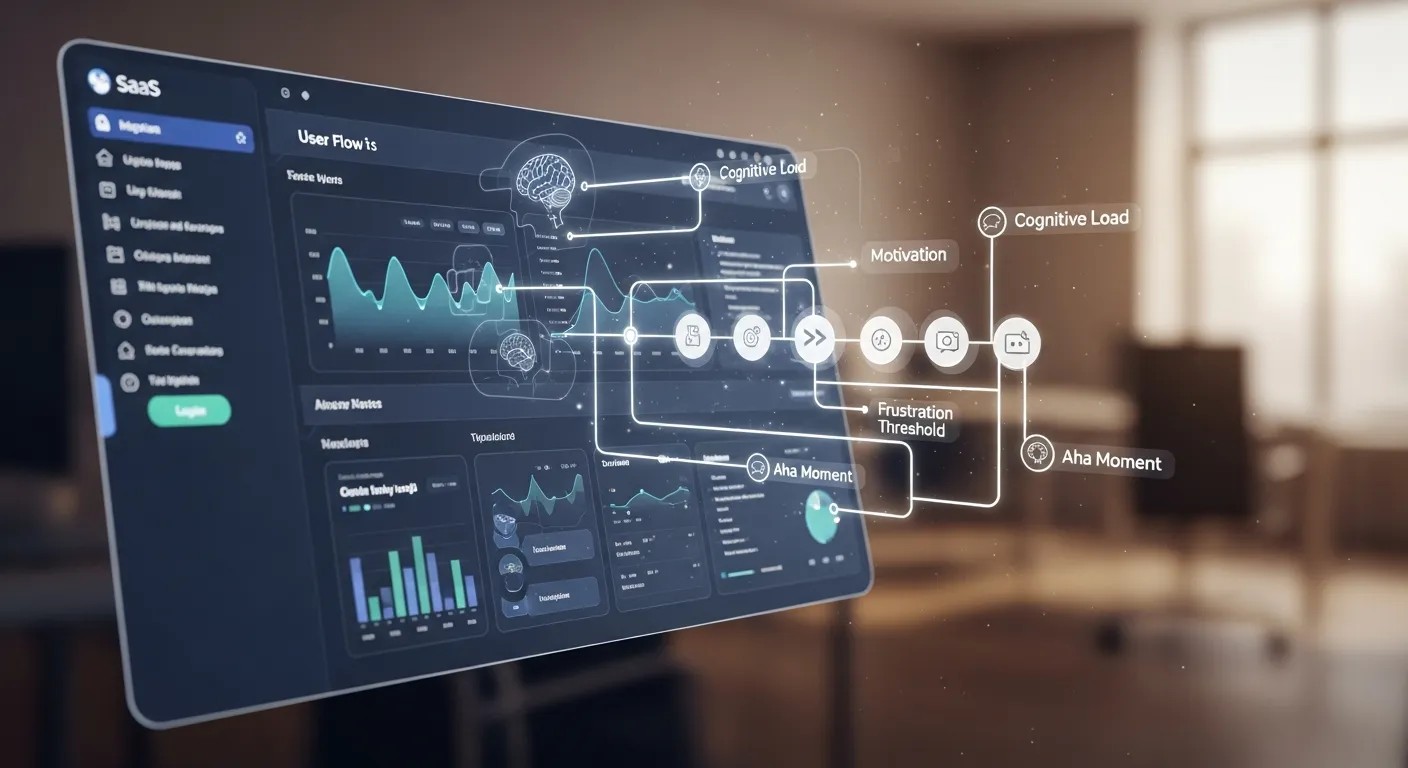
SaaS Product And User Flow works because human beings seek low-effort progress. When a user sees a clear next step, the brain reduces uncertainty. When the next step is obvious, motivation rises. When too many choices appear at once, the user delays action. In software, delay often becomes abandonment.
This is why the most effective experiences feel calm. SaaS Product And User Flow lowers mental effort by showing only what matters in the current moment. It does not force users to evaluate every possible setting at once. Instead, it structures the journey in layers. The first layer answers what to do now. The second layer reveals what to do next. The third layer appears only after the user is ready.
The Core Structure of a Scalable SaaS Experience
SaaS Product And User Flow becomes scalable when it is designed as a connected system rather than separate screens. Each screen should prepare the next one. Each decision should move the user forward. Each moment of confusion should be removed before it becomes a support issue.
The core structure usually includes discovery, signup, onboarding, activation, repeat usage, and expansion. SaaS Product And User Flow should support each stage with a clear purpose. Discovery builds expectations. Signup reduces resistance. Onboarding creates confidence. Activation delivers the first meaningful win. Repeat usage turns habit into retention. Expansion turns satisfaction into revenue.
A scalable system also respects different user types. Some users want speed. Some need reassurance. Some are technical. Some are beginners. SaaS Product And User Flow should accommodate these differences without creating separate products for everyone. The goal is not to personalize everything. The goal is to create a flexible structure that still feels simple.
| Stage | User Need | UX Goal | Common Risk |
|---|---|---|---|
| Discovery | Understand value fast | Clarify the promise | Unclear messaging |
| Signup | Minimize effort | Reduce resistance | Too many fields |
| Onboarding | Learn the first steps | Build confidence | Information overload |
| Activation | Reach first win | Show immediate value | Slow setup |
| Repeat usage | Work efficiently | Reinforce habits | Hidden complexity |
| Expansion | Adopt deeper features | Encourage growth | Feature discovery gaps |
SaaS Product And User Flow becomes easier to manage when teams map this journey from the start. A product with a clear structure is easier to improve because every problem can be placed in context.
Mapping the first-time experience
The first-time experience is where trust is either earned or lost. SaaS Product And User Flow should make the first login feel guided, not demanding. Users need enough structure to know what to do, but not so much that they feel trapped in a tutorial.
A good first-time experience usually has three goals. It should orient the user, provide one clear action, and deliver a visible result. SaaS Product And User Flow should not ask users to understand everything before they have achieved anything. Early value is more powerful than early explanation.
Onboarding as a Trust-Building Layer
Onboarding is not a lesson. It is a confidence bridge. SaaS Product And User Flow uses onboarding to help users cross from curiosity into competence. The first impression should not be about the product’s complexity. It should be about the user’s ability to succeed. SaaS Onboarding Tools can help teams structure the journey, but the product still needs to feel human, calm, and clear.
Good onboarding focuses on momentum. Every step should feel relevant. Every field should have a purpose. Every screen should reduce uncertainty. SaaS Product And User Flow becomes stronger when onboarding acts like a guide rather than a gatekeeper. The user should feel accompanied, not tested.
One common mistake is over-explaining. Teams often assume users need to know every feature immediately. In reality, most users need only the next useful step. SaaS Product And User Flow should reveal details gradually. This gives the user room to build confidence through action.
Another mistake is under-explaining. When onboarding skips necessary context, users get lost. They may not know where to click, what happened after they clicked, or what success looks like. SaaS Product And User Flow solves this by pairing instruction with visible progress.
Practical onboarding principles
SaaS Product And User Flow should keep onboarding short, relevant, and rewarding. Start with the minimum information needed to begin. Use progressive disclosure to reveal advanced settings later. Replace abstract explanations with immediate tasks. Show success states clearly so the user knows they are moving forward.
A useful pattern is the “one task, one result” approach. SaaS Product And User Flow becomes easier when each onboarding screen has a single purpose. Too many purposes create confusion. One purpose creates focus.
Another useful pattern is optional depth. Beginners can stay in the guided path. Experienced users can skip ahead. SaaS Product And User Flow should support both without making either group feel penalized.
Product Hierarchy and Interface Clarity
Hierarchy is where design becomes usable. SaaS Product And User Flow depends on visual and informational hierarchy because the user needs to know what matters most. The right hierarchy makes the product feel organized. The wrong hierarchy makes even simple tasks feel heavy.
A strong hierarchy starts with the primary action. The interface should make the main goal obvious. Secondary actions should remain available but less dominant. Tertiary actions should stay out of the way until needed. SaaS Product And User Flow works best when the screen tells a story from top to bottom, left to right, or step to step without requiring the user to decode the layout.
Labels are part of hierarchy too. When labels are vague, users hesitate. When labels are precise, action feels safe. SaaS Product And User Flow improves when names match the user’s mental model. Product language should sound like the audience, not like the engineering team.
Spacing, grouping, and contrast all affect understanding. A crowded screen feels expensive to process. A screen with too much visual competition feels unstable. SaaS Product And User Flow benefits when related items are grouped together and unrelated items are separated. This allows the eye to scan naturally.
What users notice first
Users typically notice the main action, the current state, and any sign of risk or reward. SaaS Product And User Flow should use that behavior to its advantage. The primary call to action should be easy to find. Current progress should be visible. Errors should be understandable. Success should feel immediate.
The fastest way to improve hierarchy is to remove unnecessary choices. SaaS Product And User Flow is often simplified more by subtraction than addition. When a screen has fewer competing signals, the user understands it faster.
Reducing Friction at Every Step
Friction is anything that slows the user down without adding value. SaaS Product And User Flow should identify friction as early as possible because small obstacles can produce large drop-offs. A tiny delay may seem harmless to the team, but to the user it can feel like a broken promise.
Common friction points include long forms, unclear navigation, hidden settings, inconsistent terminology, weak error states, and slow loading transitions. SaaS Product And User Flow should address each of these through design and content. Less friction means more confidence, and more confidence means more completion.
Good friction reduction starts with observation. Teams should watch where users hesitate, abandon, or ask questions. SaaS Product And User Flow becomes stronger when the product is shaped by real behavior instead of assumptions. Internal opinions are useful, but user evidence is more reliable.
Small improvements often outperform large redesigns. Changing button text can improve clicks. Reordering steps can improve completion. Grouping related controls can improve scanning. SaaS Product And User Flow benefits from these adjustments because the user feels the product becoming easier without needing to relearn it.
Micro-friction and its effect
Micro-friction is the kind of problem users may not consciously describe, but still feel. A slightly confusing label. A confirmation dialog that appears too late. A next step that does not match the previous screen. SaaS Product And User Flow suffers when these small issues accumulate.
The best teams remove micro-friction continuously. They do not wait for a major complaint. They study the pattern of hesitation and refine the path before frustration becomes churn.
Using Data Without Losing Humanity
Analytics are essential, but analytics alone do not tell the whole story. SaaS Product And User Flow should be informed by numbers and human feedback together. Numbers reveal what is happening. User feedback reveals why it is happening. Both are required for smart decisions.
Heatmaps show attention patterns. Funnel reports show where users drop off. Session recordings show hesitation. Support tickets show pain points in real language. SaaS Product And User Flow improves when teams combine these inputs into a single interpretation of the journey.
The danger is over-optimization. Teams may chase one metric and damage the experience elsewhere. A faster signup flow might reduce fields but also reduce trust. A simpler dashboard might hide useful controls. SaaS Product And User Flow should balance efficiency with comprehension. The goal is not to make the interface minimal at any cost. The goal is to make it clear and effective.
A human-centered approach asks deeper questions. Does the user feel guided? Do they understand what happened? Do they trust the next step? SaaS Product And User Flow becomes more durable when design decisions are measured against those questions, not only against event counts. A Safe Brand Monitoring Engine can also help teams watch trust signals, reputation shifts, and recurring complaints before they become larger product risks.
Feedback loops that matter
The most useful feedback loops are short and regular. Teams should review support conversations, onboarding completion, feature adoption, and exit points. SaaS Product And User Flow improves when the team sees patterns early and adjusts quickly.
Internal reviews are helpful, but users reveal blind spots. A workflow that feels obvious to the team may feel confusing to the audience. SaaS Product And User Flow should therefore include frequent testing with real people, especially before and after major releases.
Designing for Different User Intentions
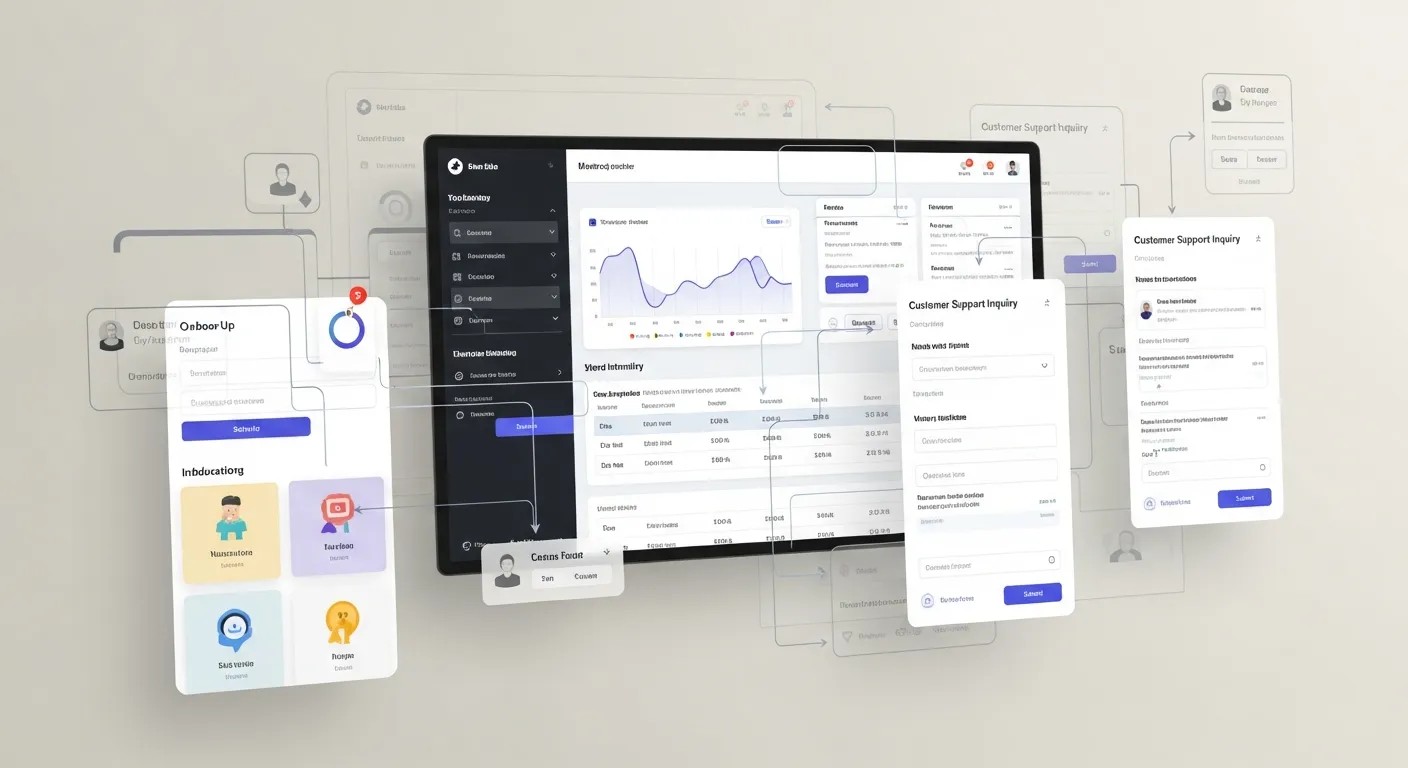
Not every user comes with the same goal. Some are exploring. Some are comparing. Some already know what they want. SaaS Product And User Flow should respect these different intentions without forcing everyone into the same tunnel.
Explorers need context. They want to understand value before they commit. Comparers need clarity. They want to see differences quickly. Experienced users need speed. They want efficient shortcuts and minimal noise. SaaS Product And User Flow should support all three by offering layered depth.
This is where progressive disclosure becomes powerful. New users see the essentials. Returning users can access advanced paths. SaaS Product And User Flow adapts to knowledge level without requiring separate experiences.
A useful product also provides escape routes. Users should be able to pause, return later, and resume easily. SaaS Product And User Flow should never make people feel trapped inside a rigid sequence. Flexibility increases confidence.
Intent-based interface patterns
Intent-based patterns include guided setup for beginners, shortcut paths for experienced users, and contextual help for uncertain moments. SaaS Product And User Flow becomes more intuitive when the product anticipates intent rather than forcing the user to declare it manually.
This does not mean making the experience complicated. It means making the experience responsive. A smart product behaves differently when the user is learning, working, or reviewing.
Content, Labels, and Microcopy
Words shape action. SaaS Product And User Flow relies on microcopy because users often decide what to do based on the language they see. A simple label can remove confusion. A strong helper text can prevent errors. A reassuring message can reduce fear.
Microcopy should answer practical questions. What is this? Why do I need it? What happens next? SaaS Product And User Flow improves when these questions are answered where they arise, not buried in documentation.
The tone should be clear and calm. It does not need to sound playful to be effective. It needs to sound useful. SaaS Product And User Flow benefits from language that respects the user’s time and intelligence.
Error messages are especially important. A vague error creates panic. A useful error creates recovery. SaaS Product And User Flow should make errors feel solvable. Tell the user what went wrong, why it matters, and how to fix it.
Better wording choices
Use verbs that describe the outcome. Use labels that match user language. Avoid internal jargon. SaaS Product And User Flow improves when the interface sounds like a capable guide, not a machine talking to itself. A Practical Outreach Workflow Process can also be clearer when product language and follow-up messages use the same plain, trustworthy terms.
Building a Product That Learns
A mature product improves through observation. SaaS Product And User Flow should never be treated as finished. User behavior changes. Business goals change. Platform expectations change. The interface must evolve with them.
This is where continuous improvement becomes a strategic advantage. Small experiments can create meaningful gains. Moving a call to action. Shortening a setup step. Simplifying a menu. Clarifying a label. SaaS Product And User Flow benefits from each refinement because the product becomes easier to use without losing capability.
Some teams hesitate to change a live product because they fear breaking what already works. That caution is understandable, but stagnation has its own cost. SaaS Product And User Flow that never changes will eventually feel outdated. Users notice when the product stops learning.
A healthy improvement cycle includes hypothesis, test, review, and iteration. Teams should define what they think will improve, measure the result, and then decide whether to keep, refine, or remove the change. SaaS Product And User Flow grows stronger when learning is built into the process.
Signals that the product needs refinement
Watch for repeated support questions, low task completion, inconsistent feature adoption, and sudden drop-offs. SaaS Product And User Flow often reveals its weakest point in the place where users get quiet, not where they complain loudly.
Collaboration Between Design, Product, and Support
SaaS Product And User Flow works best when design, product, development, and support operate from the same understanding. Design shapes the experience. Product defines the business goal. Development implements the system. Support hears where the friction actually lives. When these functions remain separated, the user feels the gap.
Support teams are especially valuable because they hear confusion in direct language. They know which terms are misunderstood, which steps fail, and which moments trigger hesitation. SaaS Product And User Flow improves when those insights are treated as product data, not just service data.
Product managers can help prioritize the most impactful fixes. Designers can translate insights into clearer layouts. Developers can make the experience faster and more consistent. SaaS Product And User Flow becomes stronger when every team sees the customer journey as shared responsibility.
Shared ownership of the journey
The customer journey is not owned by one department. It is the result of many decisions. SaaS Product And User Flow becomes scalable when teams align on a common map and make changes with the same goal in mind: reduce effort, increase confidence, and deliver value sooner.
Metrics That Tell the Truth
Not all metrics are equally helpful. SaaS Product And User Flow should be evaluated with metrics that reflect progress, not vanity. Completion rate, activation rate, time to first value, retention, and feature adoption are often more useful than simple page views.
A metric is only useful when it connects to user behavior. If a screen is heavily visited but rarely completed, that may indicate confusion. If onboarding starts often but finishes rarely, the path may be too demanding. SaaS Product And User Flow becomes clearer when each metric is connected to a specific step in the journey.
Qualitative metrics matter too. User confidence, perceived ease, and trust are harder to measure but very real. SaaS Product And User Flow should be judged by whether people understand the product faster and use it with less hesitation.
A balanced scorecard
A strong scorecard looks at speed, clarity, retention, and support load together. SaaS Product And User Flow can improve one metric while harming another, so decisions should be evaluated in context. The best result is not just a higher number. It is a better experience that also performs well.
Advanced Patterns for Growth-Ready Products
When a product matures, SaaS Product And User Flow must support more roles, more permissions, more actions, and more data without becoming chaotic. This is where structure matters most. Growth-ready systems use clear navigation, role-based views, contextual help, and predictable grouping.
Automation can help, but only when it is transparent. Users should understand what the system is doing on their behalf. SaaS Product And User Flow becomes stronger when automation reduces repeated work without removing control. Automated Software Deployment matters here because product teams need a reliable way to ship improvements without disrupting the user path.
Personalization can also improve the experience, but it should be subtle. Show the most relevant actions first. Remember preferences where appropriate. Hide complexity until needed. SaaS Product And User Flow should feel tailored without becoming intrusive.
As products grow, teams often add more features than the interface can comfortably display. The answer is not always more space. It is better organization. SaaS Product And User Flow should be designed so that new capabilities can be added without breaking the existing mental model.
Scaling without confusion
The challenge of scale is to preserve simplicity while adding depth. SaaS Product And User Flow should let power users go faster while keeping beginners safe. That balance is what turns a product into a long-term platform.
Implementation Roadmap
A practical roadmap keeps the team focused. SaaS Product And User Flow should be improved in phases rather than all at once. Begin by mapping the current journey. Identify the biggest friction points. Fix the most damaging problems first. Then test the changes and measure the result.
The roadmap should include content review, interface review, analytics review, and user testing. SaaS Product And User Flow improves when each phase informs the next. A small win in one area may unlock larger improvements elsewhere.
Teams should also document their design decisions. When the reasons are recorded, future updates are easier to manage. SaaS Product And User Flow benefits from continuity because the product stays coherent even as people change.
A simple improvement cycle
Observe the journey. Identify pain points. Prioritize by impact. Redesign the weakest step. Test with users. Review the data. Repeat. SaaS Product And User Flow becomes a living system when improvement is part of routine work, not a rare event.
Real-World Thinking for Product Teams

In practice, users do not care how elegant the system looks internally. They care whether it helps them finish work. SaaS Product And User Flow should therefore be measured by the ease of completion. If the user can start quickly, understand naturally, and recover easily, the product is doing its job.
This is where product sense and interface sense meet. A good feature that is hard to find still underperforms. A useful setting hidden behind three confusing steps still creates frustration. SaaS Product And User Flow translates product intent into visible action.
Teams that win over time usually share one trait: they make the experience simpler after every learning cycle. SaaS Product And User Flow is not improved by perfection. It is improved by repeated reduction of friction.
What maturity looks like
A mature experience feels calm, obvious, and respectful. It gives the user just enough structure to succeed and just enough flexibility to feel in control. SaaS Product And User Flow matures when the product becomes easier to trust with each release.
Conclusion
SaaS Product And User Flow is the backbone of a scalable product experience because it shapes how users think, move, and decide. When the journey is clear, users feel safer, learn faster, and complete tasks with less effort. When the journey is confusing, even strong features lose their value. The best teams treat flow as a strategic asset, not a visual afterthought. They review analytics, listen to users, refine microcopy, reduce friction, and keep improving the path from first click to repeat use. That discipline turns a product into a dependable system. Over time, SaaS Product And User Flow creates the kind of clarity that supports trust, retention, and growth.
Frequently Asked (FAQ)
1. What does SaaS Product And User Flow mean?
SaaS Product And User Flow refers to the sequence of screens, decisions, and actions that guide users through a software product from first contact to regular use.
2. Why is SaaS Product And User Flow important for growth?
It reduces friction, improves activation, and helps more users reach value faster, which supports retention and conversion.
3. How does onboarding affect SaaS Product And User Flow?
Onboarding helps users understand what to do first, reducing confusion and building confidence early in the journey.
4. What is the biggest mistake teams make?
They often add more features or explanations without fixing the core path, which increases complexity instead of clarity.
5. How can analytics improve the experience?
Analytics show where users drop off, hesitate, or repeat actions, helping teams find weak points in the flow.
6. Should all users see the same flow?
Not always. Beginners, returning users, and power users may need different levels of guidance and shortcuts.
7. What role does microcopy play?
Microcopy clarifies meaning, reduces uncertainty, and helps users know what to do next.
8. How often should the flow be reviewed?
Regularly. Product changes, user expectations, and support feedback should all trigger review and refinement.
9. Can small changes really make a difference?
Yes. Small edits to labels, layout, and sequencing often improve usability more than large redesigns.
10. What is the best goal of SaaS Product And User Flow?
The best goal is to make the experience clear, efficient, and trustworthy so users can reach value with less effort.



Leave a Reply