

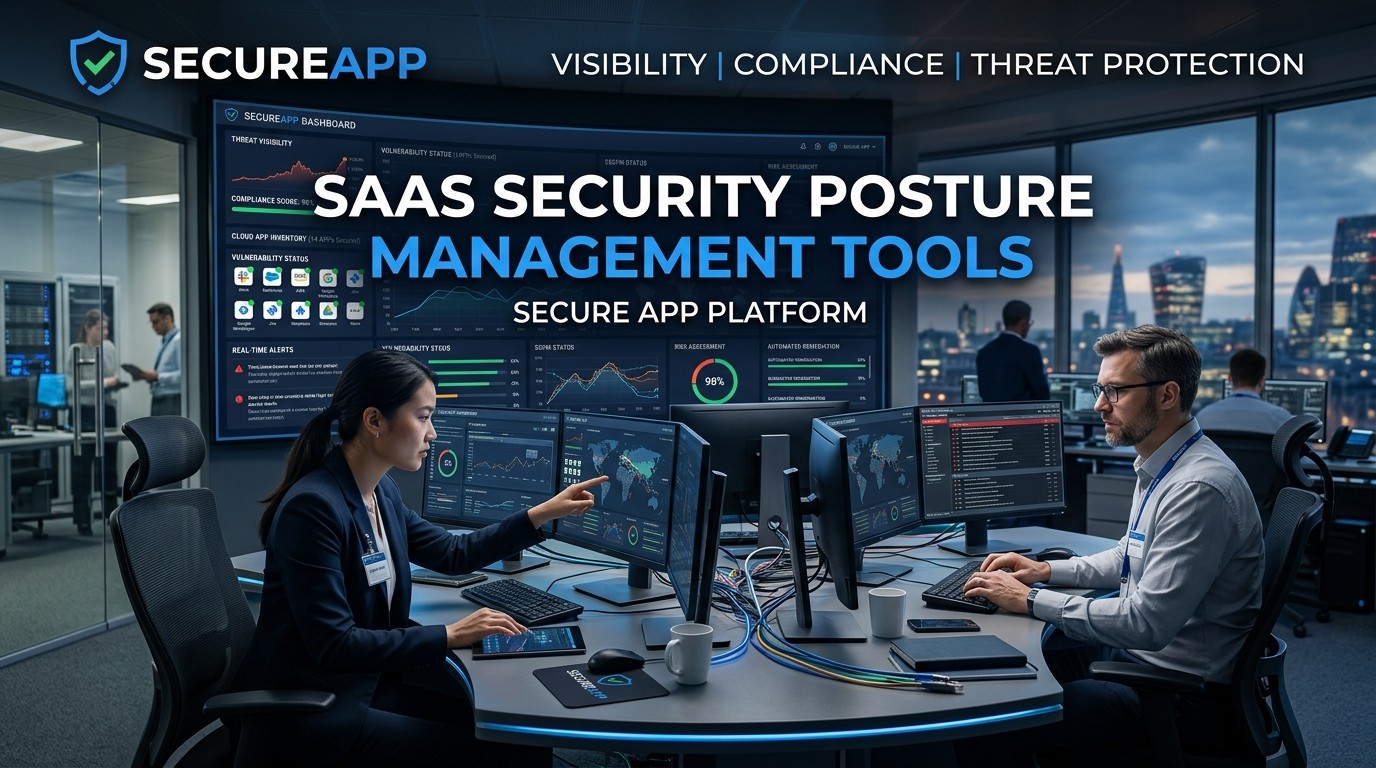
SaaS Security Posture Management Tools help security teams reduce misconfigurations, tighten app access, and keep SaaS environments visible, compliant, and easier to control as business adoption accelerates.
SaaS Security Posture Management Tools are most valuable when organizations need a clearer view of app settings, user privileges, and third-party connections. Instead of waiting for audits or incidents, teams can see where exposure is forming and act before small mistakes become expensive problems. In many companies, this visibility is the difference between controlled growth and hidden risk.
Modern SaaS stacks grow by accretion, not by design, which is why SaaS Security Posture Management Tools matter so much. One department adopts a scheduling app, another connects a file-sharing platform, and soon no one has a complete map of the environment. A posture platform helps close that gap by turning scattered data into a security picture people can actually use.
Security leaders often compare SaaS Security Posture Management Tools with traditional monitoring, but the real distinction is prevention. Monitoring shows events after they happen, while posture management reveals weak conditions that make incidents more likely. That difference helps organizations move from reactive cleanup to proactive control, which is exactly what growing SaaS programs need.
What these tools actually do
Many teams already use identity and logging products, yet they still struggle with SaaS sprawl. SaaS Security Posture Management Tools fill that gap by checking the apps themselves, not just the sign-in layer. They can surface risky sharing rules, stale admins, overprivileged accounts, and unsafe integrations that would otherwise remain buried in routine operations.
To understand the business value of SaaS Security Posture Management Tools, think about what an attacker needs: one forgotten permission, one public folder, or one broad OAuth grant. The platform’s job is to find those weak points early and rank them by impact, so remediation work stays manageable and focused on the issues that matter most.
Adoption is easier when security feels practical rather than abstract, and SaaS Security Posture Management Tools help with that psychological shift. They translate technical findings into clear priorities, reducing noise and making it easier for non-security stakeholders to understand why a control matters. That clarity improves buy-in and shortens the time between discovery and action.
Why posture management is different from basic security monitoring

SaaS Security Posture Management Tools are also useful because they normalize control across different teams. In large organizations, the same app may be configured one way by marketing and another way by finance. A posture platform compares those settings to a baseline and highlights drift, which keeps policy enforcement consistent without forcing every review to be manual.
One reason SaaS Security Posture Management Tools are gaining attention is that SaaS risk often hides in plain sight. A folder shared externally, an inactive admin account, or a connected app with too much permission can look harmless until it is exploited. Continuous posture review helps catch those issues while they are still reversible.
Teams evaluating SaaS Security Posture Management Tools should start with coverage. If the tool does not support the applications your company actually uses, the rest of the feature list matters less. Good coverage means the platform can monitor the core SaaS environment, connect findings to workflows, and give leaders confidence that the major blind spots are being addressed.
Key capabilities to expect
| Capability | Why it matters | Business benefit |
|---|---|---|
| Configuration assessment | Finds weak or inconsistent settings | Fewer risky defaults |
| Access review | Identifies excessive permissions | Lower account takeover risk |
| Shadow IT discovery | Reveals unmanaged apps | Better control of app sprawl |
| Integration analysis | Reviews connected third-party apps | Reduced supply-chain exposure |
| Compliance mapping | Checks against frameworks | Easier audits and reporting |
| Continuous remediation | Tracks fixes over time | Less security drift |
Another buying criterion for SaaS Security Posture Management Tools is remediation quality. It is not enough to detect a problem if the fix is hard to execute. The best platforms support guided actions, ownership routing, and policy-based automation so the security team spends less time chasing tickets and more time reducing real exposure.
Audit readiness becomes much simpler with SaaS Security Posture Management Tools because evidence is collected continuously instead of assembled at the last minute. That helps compliance teams answer questions about access, sharing, and configuration without turning every review into a fire drill. Continuous evidence also makes it easier to spot trends before they turn into repeat failures.
Because SaaS environments change constantly, SaaS Security Posture Management Tools work best when they are treated as an operational habit rather than a one-time deployment. A clean configuration today can become risky tomorrow if a new user group, external app, or collaboration rule gets added without review. Persistent checks keep the posture from drifting.
The psychology behind security adoption
When leaders ask why they should invest in SaaS Security Posture Management Tools, the answer is not only breach prevention. It is also productivity. Teams waste less time investigating unknown apps, cleaning up access chaos, and rebuilding trust after avoidable mistakes. A secure posture is often a faster posture, because clarity reduces friction.
SaaS Security Posture Management Tools also support better communication across departments. Security teams see exposure, IT sees configuration, compliance sees evidence, and business owners see what needs to be fixed. That shared view reduces blame and speeds resolution, which is important in organizations where no single group owns the full SaaS environment.
One practical way to roll out SaaS Security Posture Management Tools is to start with the highest-risk apps and build from there. Messaging, file sharing, CRM, and identity-linked systems usually deserve the first look because they contain sensitive data and broad access. Small wins in those areas create momentum for wider adoption.
How SaaS sprawl creates hidden exposure
People often underestimate how much risk comes from permissions, which is why SaaS Security Posture Management Tools spend so much time on access analysis. Excessive privilege is easy to miss in a busy environment, especially when employees change roles or leave projects behind. The platform makes privilege creep visible and easier to reverse.
Shadow IT is another reason SaaS Security Posture Management Tools matter. Employees usually adopt tools to move faster, not to create risk, yet those tools can still bypass security review. Discovery features give organizations a way to find unsanctioned apps, understand how they are used, and decide whether they should be approved, restricted, or retired.
Integration risk is rising because every SaaS tool seems to connect to something else. SaaS Security Posture Management Tools help review those relationships so broad data access does not accumulate silently. If one app can read, write, or sync too much information, the platform can flag that connection before it becomes an unnecessary path to exposure.
Where these tools fit in the security stack
Many security programs already rely on Access Management Tools, but posture management adds a deeper layer. Access controls can tell you who signed in, while SaaS Security Posture Management Tools tell you whether the app is configured safely after access has been granted. That distinction matters because secure authentication does not guarantee secure application settings.
Modern Security Software often promises broad protection, but the value of SaaS Security Posture Management Tools is specificity. They solve a very particular problem: the hidden risk inside the SaaS applications that teams use every day. That focus makes them easier to operationalize, because the findings map directly to concrete settings rather than vague threat signals.
The best implementations of SaaS Security Posture Management Tools are designed around workflow, not dashboards alone. Teams should be able to review findings, assign owners, track fixes, and verify progress in one loop. Without that workflow, visibility can become passive reporting instead of a force for real improvement.
Risk areas that deserve close attention
Security culture improves when SaaS Security Posture Management Tools produce a consistent language for risk. Instead of vague worries about SaaS exposure, teams can talk about public sharing, inactive admins, unsafe OAuth grants, and policy drift. That vocabulary makes the problem easier to explain and the remediation easier to prioritize.
Companies with remote teams benefit especially from SaaS Security Posture Management Tools because SaaS usage tends to spread faster when employees work from many locations. The platform helps maintain standards even when the environment is decentralized, which is important for businesses that cannot rely on a single office or network boundary.
SaaS Security Posture Management Tools are also useful after mergers, acquisitions, and rapid expansion. New teams often bring unfamiliar apps and inconsistent settings, and those inherited systems can create unexpected exposure. A posture platform helps map the acquired environment, identify urgent gaps, and establish a clearer baseline for the combined organization.
Common use cases across departments

Many leaders compare edge-style resilience to cloud governance, and the same logic explains why Edge Computing Use Cases matter in other parts of the tech stack. Whether operations are local or SaaS-based, organizations need systems that can make timely decisions close to where risk appears. The principle is the same even if the architecture differs.
The idea behind Telecom Edge Computing Use Cases is similarly relevant: distributed systems need fast responses and local intelligence. In SaaS security, that translates into rapid detection, clear ownership, and timely remediation when risky settings appear. The faster a weak condition is seen, the less damage it can do.
Good rollout planning for SaaS Security Posture Management Tools begins with baselines. Teams need to define what normal looks like for sharing, access, and integrations before they can spot drift. Once the baseline exists, the platform can compare actual conditions to expected ones, which makes every finding easier to interpret and fix.
How to evaluate a platform before buying
Organizations should also define severity clearly when using SaaS Security Posture Management Tools. Not every issue has the same business impact, and teams need a way to separate urgent exposure from lower-priority hygiene work. A good scoring model keeps attention on the issues most likely to create data loss or compliance trouble.
Training is another important part of success with SaaS Security Posture Management Tools. Non-security users often create risky configurations because they are trying to get work done quickly. Short, practical guidance helps them understand why certain settings matter and how to make safer choices without slowing the business down.
Automation can dramatically increase the value of SaaS Security Posture Management Tools when it is used carefully. Discoveries can be routed to the right owner, repetitive checks can run on schedule, and certain low-risk fixes can be applied automatically. That reduces manual overhead while keeping humans in the loop for important decisions.
A comparison table for buying decisions
| Evaluation area | What to look for | Why it matters |
|---|---|---|
| App coverage | Broad support for core SaaS stack | Less blind spot risk |
| Risk scoring | Clear prioritization logic | Faster decision-making |
| Remediation | Guided or automated fixes | Lower manual workload |
| Integrations | SIEM, IAM, ticketing, and chat tools | Better workflow adoption |
| Reporting | Audit-ready dashboards | Easier stakeholder buy-in |
| Scalability | Works across departments and regions | Supports long-term growth |
Finally, organizations should treat SaaS Security Posture Management Tools as a living control system rather than a one-time purchase. SaaS apps evolve, people change roles, integrations shift, and business priorities move. Continuous review is what keeps posture management effective after the first wave of cleanup is complete.
How to implement without overwhelming teams
Governance improves when SaaS Security Posture Management Tools are tied to ownership. Every finding should map to a team, a system, or a named role so issues do not float around unresolved. Clear ownership prevents security from becoming a shared responsibility that nobody truly owns, which is one of the most common reasons remediation stalls.
Reporting matters because leaders do not want a technical dump of every setting. They want to know whether risk is shrinking, where the biggest exposures remain, and how quickly teams are closing them. SaaS Security Posture Management Tools support that conversation by turning operational detail into executive-friendly summaries that show progress over time.
One of the strongest benefits of SaaS Security Posture Management Tools is trend visibility. A single misconfiguration can be fixed, but repeated misconfigurations reveal a process problem. When the same issue appears again and again, the platform helps teams see whether training, policy, or automation needs to change.
The role of automation
Incident response is faster when SaaS Security Posture Management Tools have already mapped app ownership and risky access paths. During a security event, teams do not want to spend hours figuring out which app contains the exposed data or who can change the settings. Better posture visibility shortens the path from detection to containment.
Policy enforcement becomes easier when SaaS Security Posture Management Tools are connected to baseline templates. Security teams can define secure defaults for common app categories, then compare live configurations against those models. That reduces debate during reviews because the expected state is already documented and approved.
Posture management also helps with offboarding, which is one of the most overlooked security moments. When employees leave or change roles, access needs to shrink quickly. SaaS Security Posture Management Tools can reveal accounts or privileges that were never removed, lowering the chance that old credentials remain active longer than they should.
How these tools support compliance
Vendor and integration oversight is a growing concern because SaaS apps often exchange data through automated connections. SaaS Security Posture Management Tools can show when a connector has more power than necessary or when a third-party app has access to information that does not match its business purpose. That visibility helps reduce supply-chain style exposure.
Teams sometimes assume that a good login system is enough, but posture drift usually happens after authentication. That is why SaaS Security Posture Management Tools remain relevant even in environments with strong identity controls. Access verification and safe configuration are different problems, and solving only one of them still leaves a gap.
Measuring success with SaaS Security Posture Management Tools should involve both technical and business indicators. Technical measures may include fewer public shares, fewer stale accounts, and fewer risky integrations. Business measures may include easier audits, lower incident response effort, and faster approvals for new SaaS use cases.
Security culture and communication
Security programs become more mature when they stop treating findings as surprises. SaaS Security Posture Management Tools make it possible to review issues on a recurring schedule, which reduces stress and helps teams plan fixes during normal operations. Predictability is valuable because it turns security into a steady discipline instead of a crisis-driven habit.
Executive support often grows after the first visible win. When a platform closes a major exposure, uncovers unmanaged apps, or shortens audit prep time, the value becomes easy to explain. That is one reason SaaS Security Posture Management Tools can be a strategic enabler, not just a technical control.
Some organizations pair posture management with periodic tabletop exercises so teams know how to respond when a risky condition appears. SaaS Security Posture Management Tools make those exercises more realistic because the scenarios can be based on actual weaknesses instead of hypothetical ones. That improves readiness and strengthens cross-functional coordination.
Where Edge Computing Use Cases still matter
Long-term value comes from continuous improvement, not just initial cleanup. SaaS Security Posture Management Tools should help organizations reduce repeated errors, simplify governance, and build a more stable operating model over time. The best programs create a cycle where each review makes the next one easier.
For large, distributed businesses, SaaS Security Posture Management Tools can also reduce uncertainty during expansion into new regions or departments. As more teams adopt SaaS tools, the platform helps maintain a common security language and a common baseline, which makes growth easier to govern without slowing innovation.
When combined with strong leadership and clear policy, SaaS Security Posture Management Tools become part of everyday operations rather than an emergency-only tool. That is the ideal outcome: security that is visible, repeatable, and low-friction enough that business teams accept it as a normal part of how the company works.
Quick implementation checklist
Before choosing a platform, list your critical apps, note the owners for each one, and identify the settings that would create the most damage if misused. Then define a baseline for sharing, admin rights, and third-party access. Next, decide how issues will be routed, who approves changes, and how often the environment will be reviewed. Finally, connect the process to ticketing and reporting so findings do not stay trapped in a dashboard. This simple sequence keeps the project grounded in operational reality and helps the team move from discovery to control without turning security into a bottleneck.
Conclusion
SaaS security is no longer a side task. It is a daily operating requirement shaped by rapid app adoption, changing permissions, and the constant possibility of hidden exposure. A strong posture program gives organizations a practical way to see risk early, prioritize the most important issues, and create repeatable control without slowing the business down. When teams combine visibility, ownership, automation, and clear communication, security becomes easier to manage and easier to trust. The result is not just fewer misconfigurations but a stronger foundation for growth, compliance, and resilience across the entire SaaS estate.
Frequently Asked Questions (FAQ)
1. What do these tools actually protect?
They help organizations find risky settings, excessive access, shadow applications, and unsafe integrations inside SaaS environments. The goal is to reduce exposure before it becomes a breach, audit failure, or operational interruption.
2. How are they different from identity products?
Identity products focus on who can log in and how authentication works. Posture management goes deeper by checking whether the application itself is configured safely after access has already been granted.
3. Do small companies need them too?
Yes. Smaller companies can accumulate SaaS risk quickly because teams often adopt tools fast and with limited oversight. Even a modest app stack can contain permission creep, hidden integrations, and risky sharing patterns.
4. What should a company look for first?
Start with app coverage, remediation support, reporting quality, and workflow integrations. A tool should match the applications your teams already use and help turn findings into action instead of producing more noise.
5. How do these tools help compliance?
They provide ongoing evidence for access, sharing, and configuration controls. That makes audits easier and reduces the scramble that often happens when teams only review security controls once a year.
6. Can automation be trusted?
Yes, when it is configured carefully. Low-risk tasks can be automated, but important changes should still follow policy and approval rules. The best systems balance speed with oversight.
7. What is the biggest implementation mistake?
The biggest mistake is deploying a platform without ownership or a clear baseline. If no one knows what “good” looks like, findings become hard to prioritize and may never be fixed.
8. How do teams measure success?
They should track reductions in risky shares, stale accounts, and unsafe integrations, along with business results such as faster audits, fewer incidents, and lower manual effort for security teams.
9. Why does visibility matter so much?
Visibility is the foundation of control. If an organization cannot see which apps exist, who can access them, and how they are configured, it cannot reliably protect the environment.
10. What is the long-term goal?
The goal is to build a repeatable, low-friction security process that keeps SaaS risk under control as the company grows. Over time, posture management should become part of normal operations rather than an emergency response.



Leave a Reply